
Bond Yield Explained: How to Calculate Your Return on Investment
September 3, 2026
Bond Yield Explained: How to Calculate Your Return on Investment
by Stuart Garawitz, Vice President of National Sales, Israel Bonds
- Bond yield measures the return an investor can expect from a bond.
- Nominal yield, current yield, and YTM each provide a different view of return.
- Understanding yield helps investors make informed fixed-income decisions.
Introduction
Over the past 15 years at Israel Bonds, I have worked with a wide range of investors, from individuals purchasing their first bond to state treasurers, institutional investors, and financial professionals managing significant portfolios. While each investor has different goals and priorities, one question comes up repeatedly: “What return can I expect to earn?” Answering that question starts with understanding bond yield.
Having bond yield explained in clear, practical terms is essential for anyone considering fixed-income investments. Whether you are planning for retirement, saving for a future milestone, or looking to add stability to your portfolio, understanding yield helps you evaluate how an investment may perform over time. Simply put, bond yield is the return an investor earns on a bond. It is one of the key measurements used to evaluate fixed-income investments because it helps investors understand the income potential of a bond and compare different opportunities.
At Israel Bonds, we have spent more than 75 years helping investors understand fixed-income investing while providing an opportunity to support the economic growth and resilience of the State of Israel. Throughout that history, transparency has remained central to our mission. Investors deserve to understand how their investments work, what returns they can expect, and how those investments fit into their broader financial plans.
In this article, I will explain the fundamentals of bond yield, the different ways yield is measured, and how investors can calculate their expected return when considering Israel Bonds.
What Is Bond Yield? The Basics
Before looking at different yield measurements, it is helpful to understand the basic structure of a bond. When an investor purchases a bond, they are essentially lending money to the issuer for a defined period of time. In exchange, the issuer agrees to pay interest according to the terms of the bond and return the investor’s original principal when the bond reaches maturity.
With Israel Bonds, investors are lending directly to the State of Israel. One area where investors often need clarification is the difference between a bond’s coupon rate and its yield. While the two concepts are connected, they represent different things. The coupon rate is the fixed annual interest rate established when a bond is issued. For a traditional fixed-rate bond, that rate remains unchanged throughout the life of the investment. Yield, however, measures the actual return an investor receives from the bond. Depending on the purchase price and market conditions, the yield may be higher or lower than the original coupon rate.
This distinction is especially important when discussing bonds that trade on the secondary market. Because those bonds can be bought and sold after issuance, their prices can fluctuate based on changes in interest rates and investor demand. Israel bonds do not trade on the secondary market; they must be held to maturity. Where the explanations below mention bond price after issuance or market price, that explanation pertains to bond markets widely, but not Israel bonds specifically.
Understanding the Relationship Between Bond Prices and Bond Yields
One of the fundamental concepts in fixed-income investing is the relationship between bond prices and bond yields. The relationship is inverse, meaning that when one moves higher, the other generally moves lower. When prevailing interest rates rise, newly issued bonds typically offer higher interest rates. Existing bonds with lower coupon rates become less attractive to investors, which can cause their market prices to decline. When interest rates fall, existing bonds with higher coupon rates may become more attractive, which can increase their market value.
Consider a simple example: Imagine you own a bond that pays a 5% annual coupon. Later, new bonds are issued offering a 6% interest rate. If you wanted to sell your bond before maturity, a new investor would likely expect to purchase it at a lower price. That discount would increase the bond’s effective yield and make it more competitive with newly issued bonds offering higher rates. This concept can seem complicated at first, but the underlying principle is straightforward. Investors compare available opportunities, and bond prices adjust to reflect changes in interest rates. It is also important to understand how this applies to investors who hold bonds until maturity.
Price fluctuations primarily affect investors who buy and sell bonds in the secondary market. Investors who purchase Israel bonds directly and hold them until maturity continue to receive the interest payments specified at purchase and receive their full principal back when the bond matures.
The Three Most Common Ways Bond Yield Is Measured
Not every yield measurement answers the same question. Investors use different yield calculations depending on what they are trying to understand. Fortunately, these concepts are easier to understand than the terminology may suggest.
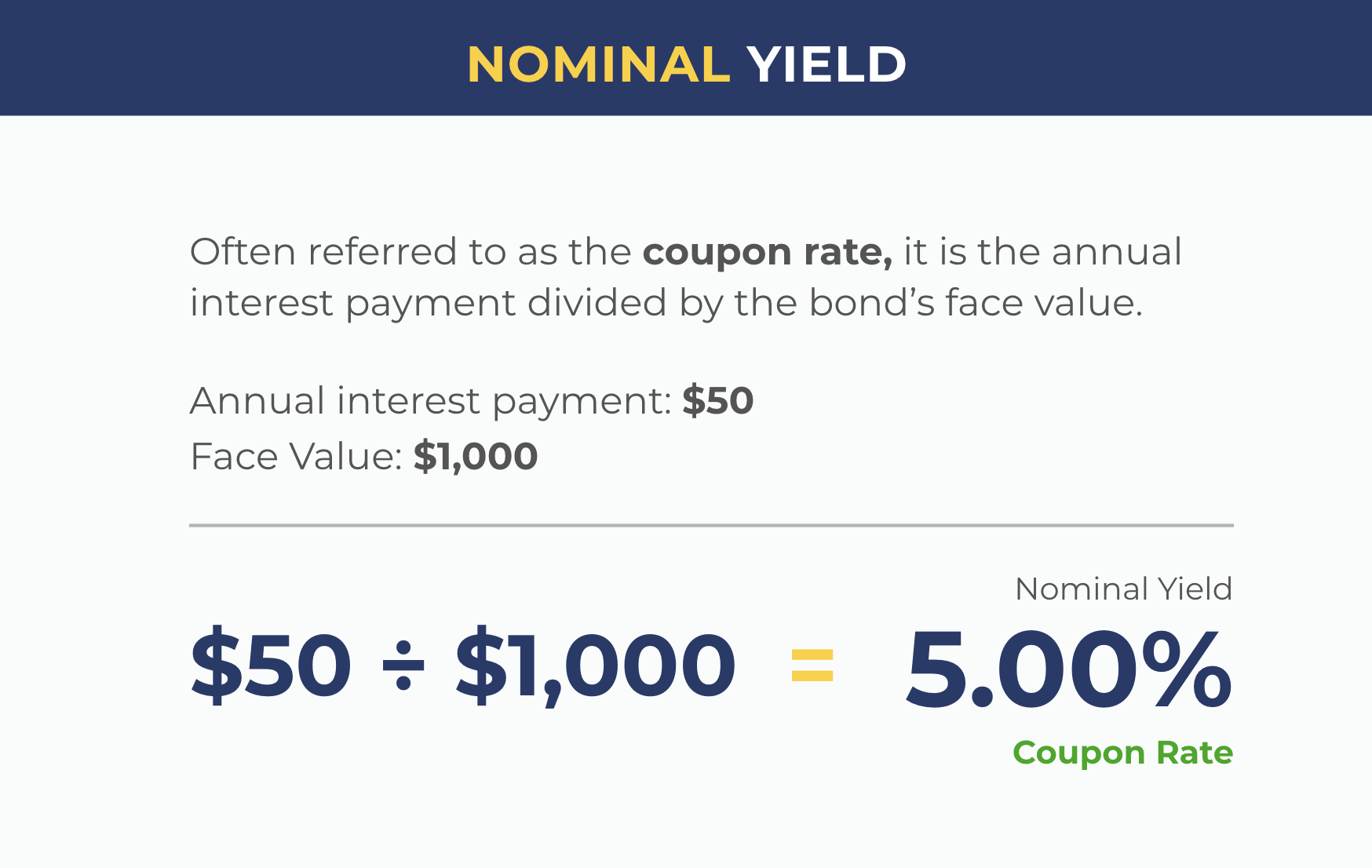
This is the most straightforward yield measurement because it reflects the fixed interest rate established when the bond was issued. If an investor wants to know the stated interest payment based on the original value of the bond, the nominal yield provides that information.
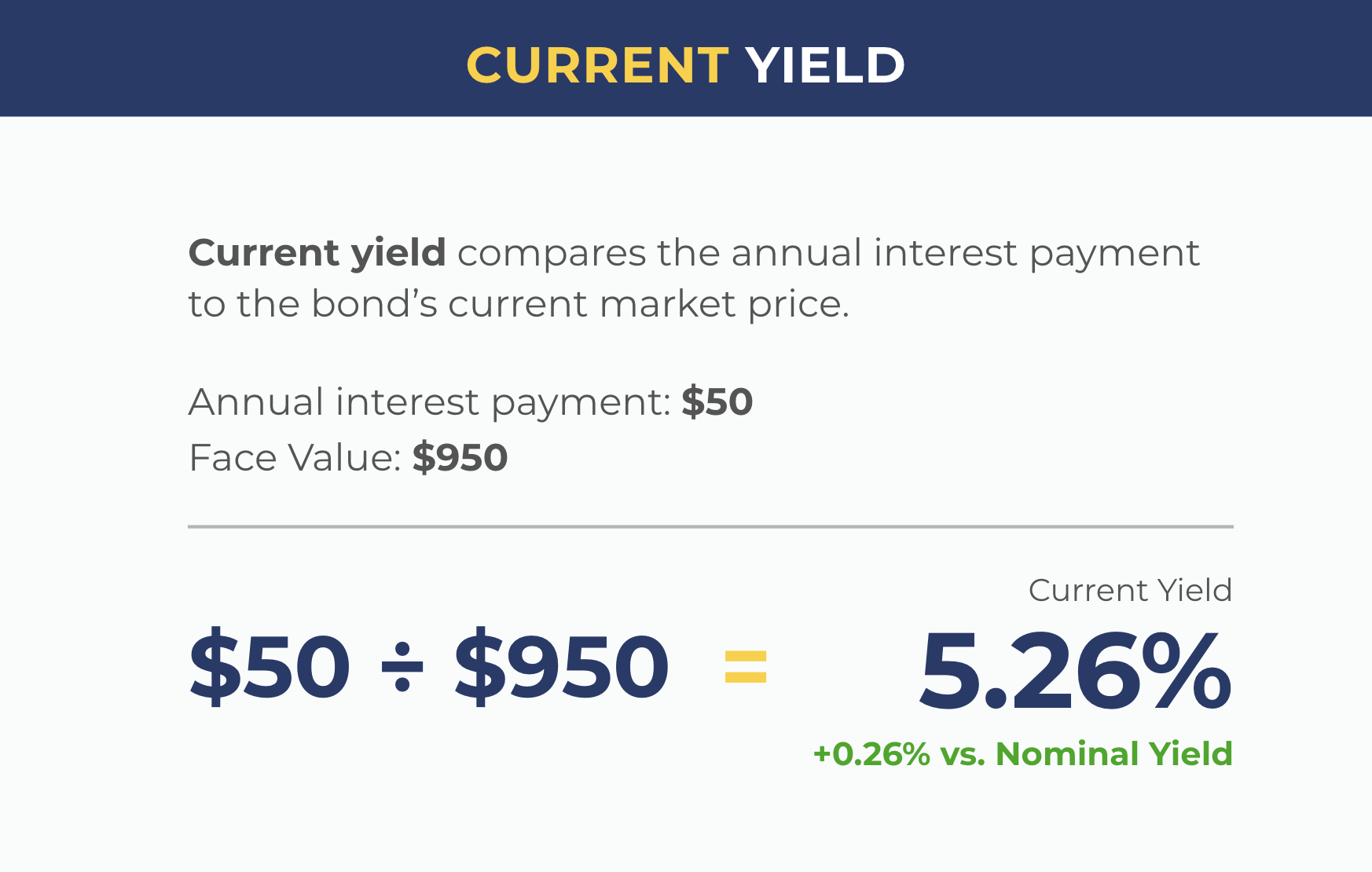
Because the investor is purchasing the bond below its original face value, the return relative to the purchase price is higher than the original coupon rate. Current yield is particularly useful when evaluating bonds available in the secondary market because it reflects the income generated based on today’s price.
Yield to Maturity (YTM): Yield to Maturity, commonly referred as YTM, provides the most complete estimate of a bond’s total expected return if it is held until maturity.
Unlike nominal yield and current yield, YTM considers several factors at the same time, including the purchase price, face value, coupon payments, and the amount of time remaining until maturity. It also accounts for any difference between the purchase price and the amount returned at maturity. The calculation itself is more complex, but the purpose is simple: to estimate the overall return an investor can expect over the full life of the bond. When investors ask me which yield measurement provides the most complete picture, Yield to Maturity is usually the answer because it considers the entire investment journey, from purchase through maturity.
Another way to think about these three measurements is that each answers a different question. Nominal yield explains the bond’s stated interest rate. Current yield shows the income generated based on today’s market price. Yield to Maturity estimates the total return if the investor holds the bond until maturity.
Calculating Your Return with Israel Bonds
One of the advantages I often discuss with investors is the transparency of calculating expected returns when purchasing Israel bonds through Development Corporation for Israel. Investors can review current interest rates and the official prospectus before making a decision. These materials provide important details, including maturity dates, payment schedules, investment minimums, and other terms that help investors understand exactly what they are purchasing.
One question I hear frequently is, “How do I know which bond is right for my goals?” The answer depends on each investor’s individual circumstances, including their timeline, income needs, and overall financial strategy. Israel Bonds offers different investment structures because investors have different objectives. Some investors prefer receiving interest payments during the life of the bond, while others prefer an investment designed for a future financial goal.
In my experience, investors appreciate knowing the details upfront. When the interest rate, maturity date, and payment structure are clearly defined, it becomes easier to calculate expected returns and understand how an investment fits within a broader financial plan. This transparency has been a defining feature of Israel Bonds for generations and remains one of the reasons investors continue to choose these investments.
When Financial Returns Meet Meaningful Impact
Every investment decision begins with understanding the fundamentals: the expected return, the investment timeline, the level of risk, and how the investment fits within an overall financial strategy. Those considerations should always come first.
Throughout my career, I have worked with investors of all types, and one thing has remained consistent: people want to make thoughtful financial decisions. They want to understand where their money is going, how it is expected to perform, and whether the investment supports the goals they have worked hard to achieve.
With Israel Bonds, there is an additional dimension that many investors find meaningful. The return earned on an Israel bond can support important personal financial objectives, including retirement planning, saving for education, building a diversified portfolio, or preserving capital over time. At the same time, the investment helps support the economic development and resilience of the State of Israel.
Since Israel Bonds was established in 1951, proceeds from bond sales have contributed to strengthened Israel’s economy and its long-term growth. Investors understand that while they are making a financial decision for themselves and their families, their investment is also contributing to something larger.
Over the years, I have had the privilege of meeting investors who purchased their first Israel bond decades ago and continue investing today. Some were introduced to Israel Bonds by their parents or grandparents and later introduced the opportunity to their own families. Others began investing because they were looking for a fixed-income opportunity and came to appreciate the broader significance behind their investment.
I have also worked with institutional investors, including states, municipalities, and other organizations, that recognize the importance of evaluating both the financial characteristics of an investment and the purpose behind it.
Those conversations have reinforced an important lesson for me: investors do not view financial decisions in isolation. They want investments that make sense from a financial perspective, and many also value knowing that their capital is supporting something they believe in. That combination is what makes Israel Bonds unique.
Conclusion
Understanding bond yield is an important step for anyone evaluating fixed-income investments. Once investors understand what yield represents, how it differs from a coupon rate, and why bond prices and yields move in opposite directions, they are better prepared to evaluate opportunities and make informed decisions.
It is also important to recognize that different yield measurements serve different purposes. Nominal yield explains the stated interest rate of a bond. Current yield helps investors understand income relative to a bond’s current market price. Yield to Maturity provides a broader view of the total return an investor may expect when holding a bond until maturity.
In my experience, successful investing is not simply about pursuing the highest possible return. It is about understanding the investments you own, knowing how they fit into your financial plan, and making decisions with confidence.
For more than 75 years, Israel Bonds has provided investors with transparent fixed-income opportunities that combine clearly defined terms with the opportunity to support Israel’s continued economic future and resilience. If you are considering adding fixed-income investments to your portfolio, I encourage you to review Israel Bonds’ current rates, carefully read the applicable prospectus, and consult with your financial and tax advisors to determine whether an Israel bond may be appropriate for your individual circumstances.
After 15 years working with investors across the country, I have found that some of the most valuable conversations are not about chasing the highest return. They are about helping people understand their options so they can make decisions with confidence. That is the purpose of explaining bond yield clearly. When investors understand how an investment works, they are better equipped to plan for their future.
Sources and Further Reading
For readers interested in learning more about bond yields and fixed-income investing, the following resources provide additional educational information:

About the Author
Stuart Garawitz is Vice President of National Sales at Israel Bonds/Development Corporation for Israel, where he leads the organization’s National Campaign across 18 U.S. sales offices.